What Is a Disciplinary Charge Sheet in South Africa?
A disciplinary charge sheet notifies an employee of the specific misconduct allegations against them before a disciplinary hearing. Under South Africa's Code of Good Practice: Dismissal (effective September 2025), charges must be clearly stated so the employee can prepare a meaningful response.
The charge sheet is not a verdict. It is a notice of allegation - the document that opens the formal hearing process. Without it, or with a vague version of it, any subsequent warning or dismissal is procedurally unfair before it starts.
The rule the CCMA applies
Substantive fairness asks whether the employee actually committed the offence. Procedural fairness asks whether they knew what they were accused of, had time to prepare, and were genuinely heard. A vague or late charge sheet destroys procedural fairness regardless of how serious the underlying misconduct was. Which is why the charge sheet is only ever one document in a chain. Think of your last hearing. Could you produce the charge sheet, the notice, the minutes and the outcome, all four, tomorrow morning?
What Each Section Does, and Why
Every part of the template closes off a ground on which the process can be challenged. Skip one and you hand the employee - or their representative - a procedural argument.
Names the company, the manager issuing the sheet, and the employee. An unnamed or undated charge sheet is immediately challengeable at the CCMA.
The factual heart. State the specific act, the date, and the rule or standard breached. Vague charges like "poor attitude" fail here - the employee must know exactly what they are accused of.
Fixes the date, time and place so the employee has genuine notice and time to prepare. The 2025 Code requires a reasonable opportunity - this is where you record that you provided it.
Records that the employee was told of their right to be heard and to be accompanied. Procedural fairness starts here.
Puts the stakes on the table without prejudging the outcome. The employee must know that dismissal is possible, but the section must also make clear no decision has been made yet.
Confirms receipt. A signature does not mean agreement. If the employee refuses, a witnessed note that it was read aloud and handed over keeps the process intact.
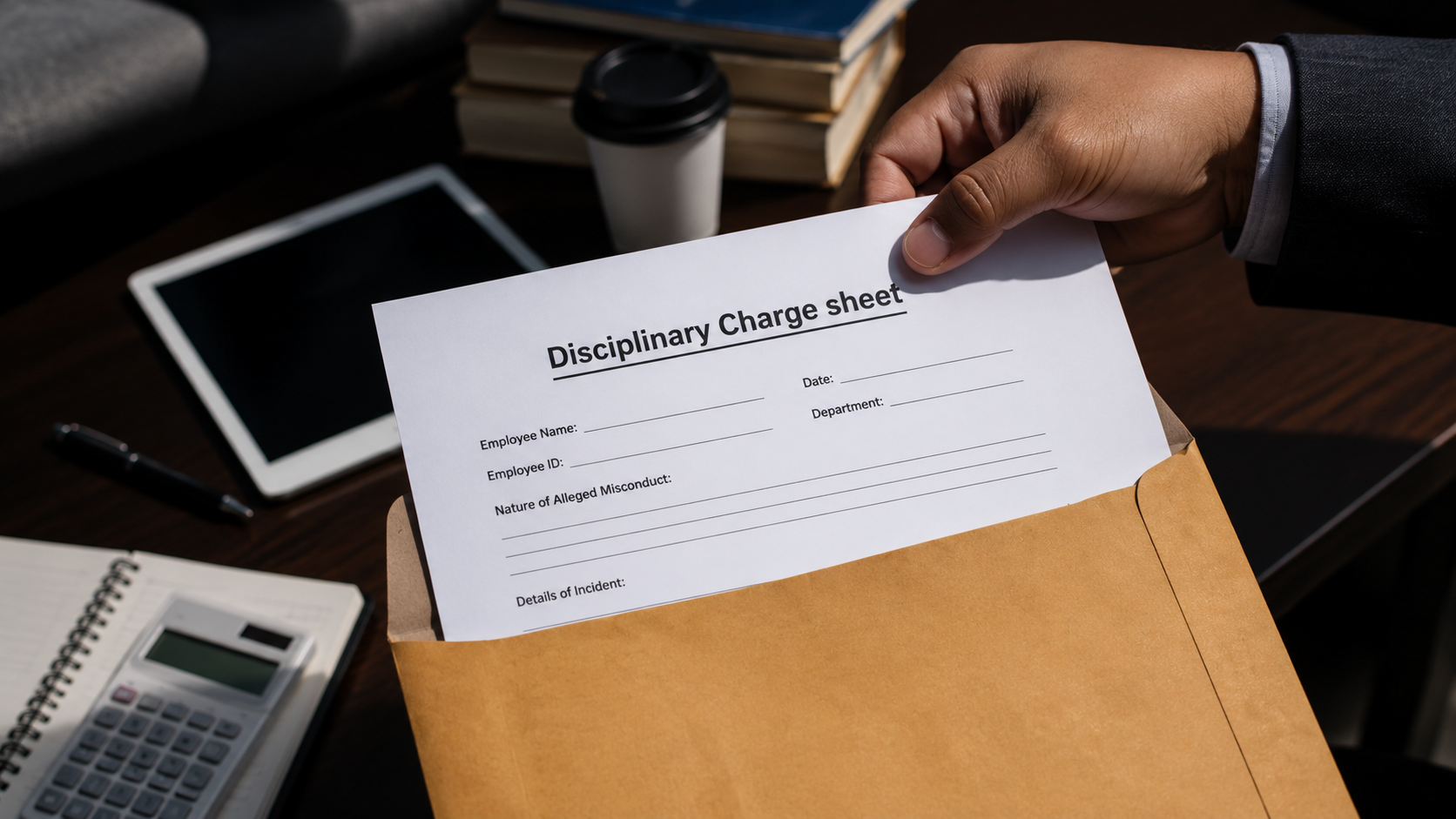
A charge sheet that is vague or arrives too late hands the employee a procedural argument before the hearing opens.
The 2025 Code of Good Practice and the CCMA
The Code of Good Practice: Dismissal came into effect on 4 September 2025, replacing the long-standing Schedule 8 of the LRA. Every employer's disciplinary process - charge sheets included - must now reflect the new Code. The CCMA measures procedural fairness against it at arbitration.
What the new Code changed for charge sheets
The 2025 Code makes explicit that procedures may be scaled to the size and resources of the employer, but the core requirements - notice of the allegation, reasonable time to prepare, and a genuine opportunity to respond - are non-negotiable regardless of company size. The charge sheet is how you document all three before the hearing opens.
Any template still citing "Schedule 8" in the header is referencing superseded law. This template references the 2025 Code.
4 Mistakes That Make a Charge Sheet Indefensible
Vague charges
Writing "insubordination" without specifying what happened, when, and which rule was breached gives the employee nothing concrete to respond to. Particulars that are this thin result in a procedurally unfair finding even when the underlying misconduct was real.
Not enough notice
Handing over a charge sheet an hour before the hearing is not reasonable notice under the 2025 Code. Standard practice is at least 48 hours. Less than that and the employee can argue they could not prepare a proper defence.
Omitting the rights clause
The employee must know they can be accompanied by a fellow employee or union representative. Leaving this out is a textbook procedural failure that an arbitrator will note even if the charge itself was valid.
Prejudging the outcome
Writing "you will be dismissed" rather than "possible consequences include dismissal" treats the hearing as a formality. The Code is clear: the employee must have a genuine opportunity to influence the outcome. Language that suggests the decision is already made destroys that.
The Disciplinary Ladder
The charge sheet sits at the hearing stage of progressive discipline. Here is where it fits in the full sequence, with links to Synthro's other free templates.
Verbal warning
Informal. Record that it was given.
Written warning
Free template →Formal paper trail begins.
Final written warning
Free template →Last step before a hearing is called.
Charge sheet → Disciplinary hearing
Free template →This template. Serve it with a notice of hearing.
Dismissal letter
Free template →Outcome of the hearing, if dismissed.
Drafted From the Record, and Filed Against It
Getting the letter right is step one. A CCMA commissioner will ask whether your process followed the new Code of Good Practice: Dismissal (September 2025) - not Schedule 8. NALA walks you through every step of the disciplinary process so your procedure holds up if the employee refers. Start with NALA before the hearing, not after.
Because Synthro is built for South African labour law, NALA knows the current Code. Every charge sheet, hearing outcome and warning is stored on the employee record with its date and status, so your full disciplinary history is always there when you need it.
One document in a chain of four
Word and PDF, with all five parts the 2025 Code expects: the parties, the charge, the hearing details, the employee's rights and the possible consequences. It goes to your inbox, so you still have it the next time this comes up.
Need to issue one right now?
Copy the full charge sheet text, paste it into Word or Google Docs, and fill in the bracketed fields. All five parts the 2025 Code expects are already there.
Frequently Asked Questions
What is the difference between a charge sheet and a written warning?
A written warning documents a completed disciplinary outcome - the misconduct was found proven and a sanction was imposed. A charge sheet comes before any outcome: it is the formal notice of allegations that triggers the hearing. You cannot issue a fair warning or dismissal without first issuing a charge sheet and holding a hearing.
How much notice must an employer give before a disciplinary hearing in South Africa?
The 2025 Code of Good Practice: Dismissal requires the employee to receive reasonable notice of the hearing. Standard practice is at least 48 hours. The charge sheet must be issued before the notice period begins so the employee has genuine time to prepare their defence and arrange representation.
Can an employee refuse to attend a disciplinary hearing?
Yes, but it does not help them. If an employee refuses to attend a properly convened hearing without a valid reason, the employer may proceed in their absence. The outcome carries the same weight as if they had attended, and the refusal itself may be noted as aggravating. Issue the charge sheet in writing and keep a record it was delivered.