There is no fixed percentage, and that is the point
South African law does not set a night shift allowance percentage. What section 17 of the BCEA requires is that night work, meaning any work after 18:00 and before 06:00, happens only by agreement, is compensated with an allowance (which may be a shift allowance) or with reduced working hours, and is worked only when transport is available at the start and end of the shift.
BCEA s17(2) - the conditions for night work
agreed + allowance OR reduced hours + transport available both ways
So the rate is something you set and write down. A bargaining council agreement for your sector may set it for you, and where one binds your business, its figure applies.
The part that gets tested later
A night allowance is only as good as the record that it was paid. Think of your latest shift. Could you show which hours fell after 18:00, what allowance was agreed, and where it appears on the payslip?
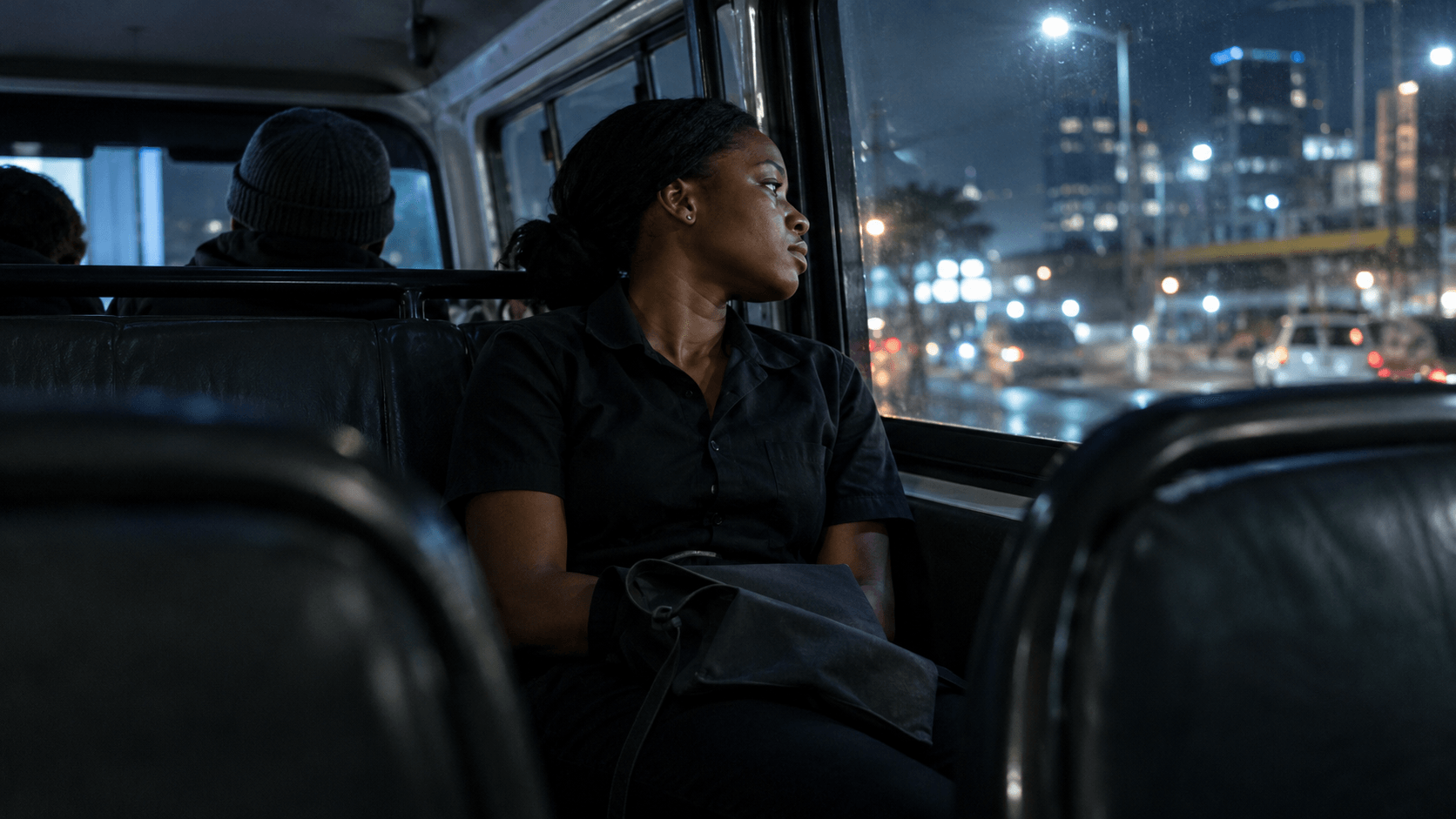
Transport home at the end of the shift is a condition of night work, not a courtesy.
Who the night work rules cover
Every employee who works after 18:00, which is a far wider group than people who think of themselves as night-shift workers: dinner service in a restaurant, a petrol station attendant on a 14:00 to 22:00 shift, a security guard, a nurse, a warehouse picker on the late shift.
Covered
Employees earning at or below the BCEA earnings threshold who work any hours between 18:00 and 06:00.
Not covered by s17
Senior managers, and employees earning above the threshold (s6(3)). Their contract governs.
Sector rules
A bargaining council agreement or sectoral determination may add to or vary these rules for your sector. Check before you set a rate.
How to calculate a night shift allowance
Because the Act leaves the amount to agreement, employers use one of three structures. Each is lawful if it is agreed, applied consistently and genuinely compensates the night hours.
A percentage of the hourly wage
For each hour after 18:00. Easy to explain and scales with pay.
A fixed amount per night shift
Simpler for payroll, but check it still means something for the longest shifts.
Reduced working hours
A shorter night shift paid as a full one. Common where transport or fatigue is the real problem.
Illustration only: a 14:00 to 22:00 shift at R40 an hour, with an agreed 10% night allowance
| Ordinary pay | 8 hours × R40 | R320.00 |
| Night hours | 18:00 to 22:00 | 4 hours |
| Night allowance | 4 × R40 × 10% | R16.00 |
| Pay for the shift | R320 + R16 | R336.00 |
The 10% is an example of an agreed figure, not a legal minimum. Whatever you agree, put it in the employment contract and show it as its own line on the payslip.
Working regularly after 23:00: the extra duties
An employee works regularly after 23:00 if they work for more than an hour between 23:00 and 06:00 at least five times a month, or 50 times a year (section 17(4)). For them, three more duties apply:
Tell them about the health and safety risks
In writing, or orally where needed, in a language they understand, together with their right to a medical examination.
Pay for a medical examination on request
Before they start the work or within a reasonable period, and at appropriate intervals while they continue.
Move them to day work if their health requires it
Where they suffer a health condition associated with night work and a day position is practicable, within a reasonable time.
Pregnancy is a separate rule. During pregnancy and for six months after the birth, an employer must offer an employee who is required to work nights suitable alternative work on no less favourable terms, where it is practicable (section 26(2)).
When night work falls on a Sunday or runs into overtime
The rules stack rather than replace each other. A Saturday night shift that runs past midnight into Sunday is treated as worked wholly on whichever day holds most of it (section 16(5)), and Sunday hours are paid at one and a half or double the wage depending on whether the employee ordinarily works Sundays. Overtime is paid at one and a half times the wage (section 10). The night allowance sits on top, for the hours after 18:00.
That is three different rates on one shift, and the payslip should show each one. The daily rate calculator gives the hourly base they are all calculated from, and the restaurant labour law guide works a Sunday example through for a waiter.
How to write night work into an employment contract
Section 17 turns on agreement, so the agreement is the first thing a labour inspector or a commissioner asks to see. A short clause covers it. Adapt the bracketed parts and keep it in the signed contract, or in a signed shift agreement for existing staff:
Night work. The Employee agrees to work shifts that include hours between 18:00 and 06:00 as rostered. For every hour worked in that period, the Employer will pay a night-work allowance of [__% of the hourly wage / R__ per hour / R__ per shift], shown as a separate line on the payslip.
Transport between the Employee’s home and the workplace is available at the start and end of each such shift by [describe: staff transport / an allowance for a contracted taxi / public transport operating at those times].
Where the Employee works for more than one hour after 23:00 at least five times a month, the Employer will inform the Employee of the related health and safety risks and, on request, arrange a medical examination at the Employer’s cost.
Three things make the clause hold up. The allowance is stated as a rule, not left to the manager on the night. The transport line describes what actually exists, because an arrangement that stops running at 21:00 does not cover a shift that ends at midnight. And the payslip shows the allowance separately, so that months later anyone can see it was paid.
For new staff, put the clause straight into the employment contract template. For existing staff moving onto late shifts, a one-page signed addendum is enough; changing someone’s hours without agreement is itself a change to their terms.
Five night-work mistakes employers make
Treating 18:00 to 22:00 as a day shift
Night work starts at 18:00, not at midnight.
No written agreement
Section 17 requires night work to be agreed. Put it in the contract or a signed shift agreement.
An allowance that exists only in someone’s memory
If it is not on the payslip as its own line, you will struggle to prove it was paid.
Ignoring the last bus
A shift that ends after the last taxi with nothing arranged fails the transport condition.
No medical examination offered
Staff who regularly work after 23:00 must be told they can ask for one, at your cost.
The allowance is easy. Knowing which hours earned it is not.
Night work, Sunday work and overtime are all worked out from the same clock-in and clock-out times. When those live on paper cards or a group chat, every allowance is an estimate. Synthro records time worked on the employee record, so the hours after 18:00 are counted before payroll runs.
Frequently Asked Questions
What is the night shift allowance rate in South Africa?
The BCEA sets no rate or percentage. Section 17 requires night work to be compensated by an allowance, which may be a shift allowance, or by a reduction in working hours, as agreed between employer and employee. Some bargaining council agreements set a rate for their sector, and where one binds you, it applies.
Is night shift allowance compulsory in South Africa?
Compensation is compulsory, an allowance specifically is not. An employer may only require or permit night work by agreement and if the employee receives either an allowance or a reduction in working hours, and transport is available at the start and end of the shift.
What time is night shift in South Africa?
Under section 17 of the BCEA, night work is any work after 18:00 and before 06:00 the next day. A shift from 14:00 to 22:00 therefore includes four hours of night work.
Does an employer have to provide transport for night shift workers?
Transport must be available between the employee’s home and the workplace at the start and end of the shift (section 17(2)(b)). The Act does not require the employer to provide it in every case, but night work may not be required where no transport is available.
Can a pregnant employee work night shifts?
During pregnancy and for six months after the birth, an employer must offer an employee who is required to do night work suitable alternative employment on terms no less favourable, where it is practicable (BCEA section 26(2)).
Do managers get night shift allowance?
Not under the BCEA if they earn above the earnings threshold, because the working-time chapter, section 17 included, does not apply to them (section 6(3)). Their contract may still provide one.
Is overtime at night paid twice?
They are separate entitlements. Overtime is paid at one and a half times the wage for overtime hours (section 10), and the night-work allowance compensates for the hours falling after 18:00. Where both apply, the contract should say how they combine, so the payslip can show both lines.